
Shepherded towards Renewal
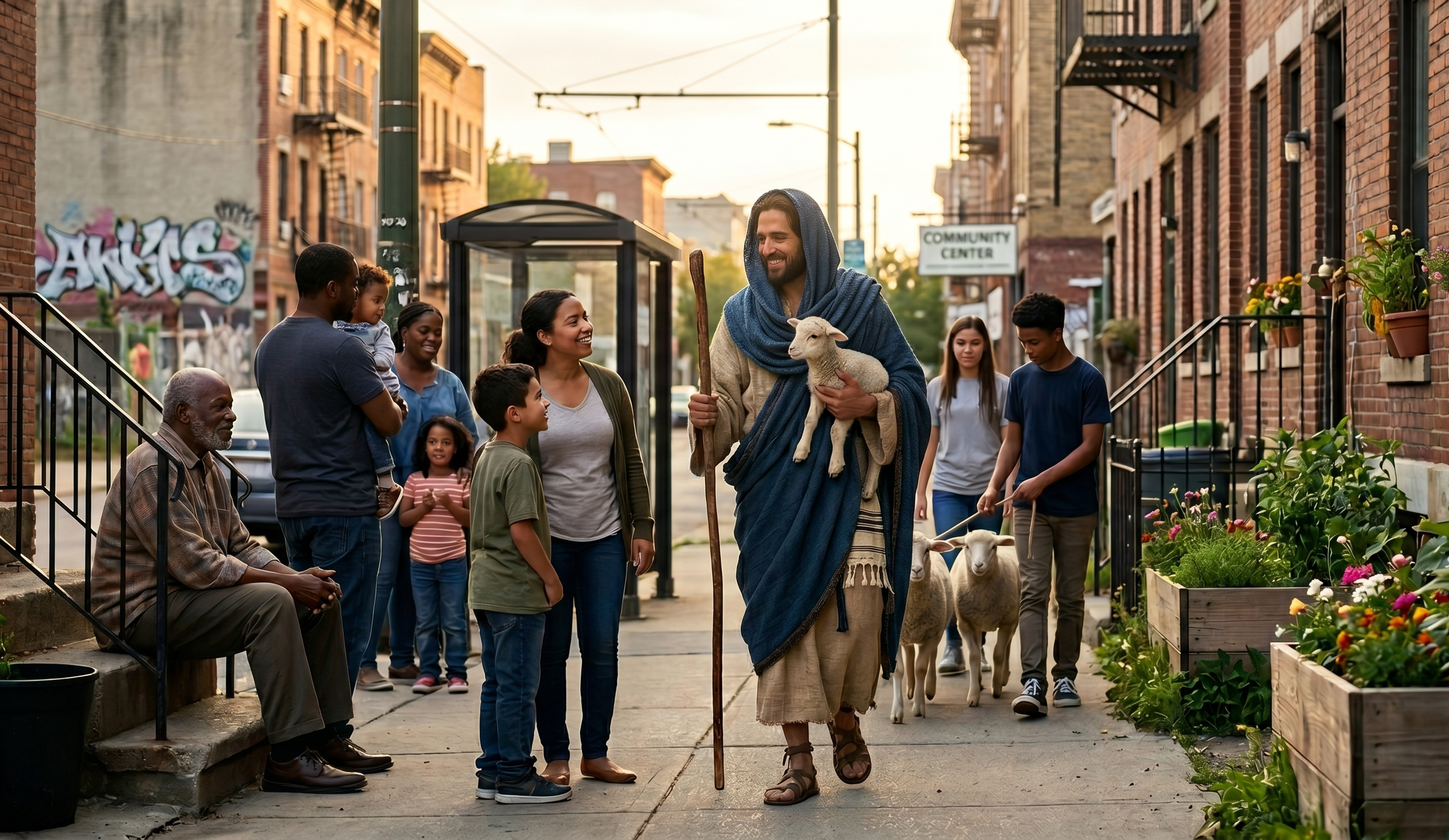
I am the Good Shepherd, I know my own and my own know me.
John 10:1
We’re halfway through the Easter Season, as we move toward Pentecost. The 40 days of Lent was a journey of anticipation toward the cross, then we walked along Christ in the suffering of the Triduum, beheld the rising of Easter Sunday, were stunned on the walk to Emmaus, comforted on Divine Mercy Sunday, and consoled on Good Shepherd Sunday. The Liturgy walks us through a process of renewal.
On the Fifth Sunday of Easter, May 3rd, we flash back to before the crucifixion, where Jesus tells the apostles he will go to his Father’s house and prepare for them a place to be with God. As usual, the apostles don’t quite understand the ramifications of the reality — Jesus descending into Hell, to defeat death, and open the way to heaven, ultimately making a place for us to join Him in eternity.
As above, so below
There is a parallel process occurring through the Gospels, on Earth as it is in Heaven.
Here on Earth with us, Jesus rises in popularity, preaches, performs miracles, he enters Jerusalem like a king. Then his path descends into the passion; death and crucifixion. Three days later, he rises again, fully revealing himself as God to the apostles, then rises into Heaven.
As it was in Heaven, there is another act occurring. Jesus descends from on high, in the shape of a baby, born to a carpenter, lives life and dies, fully human, fully Divine. He descends into Hell, smashes the gates to open the way to Heaven, and then ascends to heaven.
The process here is a rising, a falling, a moving through, and a complete fulfillment.
This same arc of fulfillment is often mirrored in our own lives.

To know and be known
In this week’s Gospel, Phillip pleads with Jesus, “show us the Father, and that will be enough for us.” This request may sound familiar, as it is the universal cry of the human heart in distress. When we feel trapped in the descent of our own lives, wrestling with the suffocating weight of stress, depression, anxiety, or the disorienting shadows of trauma, we just want to see the way out. We want a burning bush, someone riding in on a cloud to remove us before the flood takes us away. We want definitive proof that we are not abandoned in the dark.
But Jesus gently points Philip’s gaze back to relationship: "Have I been with you for so long a time and you still do not know me?"
Here is the reality of the Good Shepherd: healing begins not with a map out of the depths of the valley, but with the profound vulnerability of being known and feeling safe within it.
When walking through the valley, and your foot is impaled by a thorn, your automatic reaction is to retract, cover the pain, and to protect it. Trauma and mental suffering inherently isolate us; they convince us that our interior world is too chaotic or broken to be understood or loved. We retract, we protect ourselves, and feel immobile in our pain.
Yet, the Good Shepherd says, “I know my own.” To be shepherded toward renewal requires our own "Holy Effort." We must allow ourselves to be seen in our brokenness. This often looks like the courage to speak our deepest fears aloud to another human being, an earthly shepherd holding a torch gently pointing light into our dark. Spiritually, it means standing before God without our armor, trusting that the One who descended into Hell to smash the gates of death is not intimidated by the hellish landscapes of our own minds.
Our journey toward an Integrated Heart mirrors Christ's paschal mystery. It is a rising, a falling, a moving through the suffering, and ultimately, a restoration. We are halfway through the Easter season, but the invitation remains a daily one: let yourself be known by the Shepherd, so that He might guide you safely into the fulfillment of who you were created to be.